

Today, Dale Woods, a professional trader, will talk about several small ways to deal with consolidation.
Wood started trading in the foreign exchange market in 2007 and is a foreign exchange maniac who loves Price Action analysis in particular. So far, he has accumulated 12 years of trading experience. In his over a decade trading career, Wood has been constantly studying price actions and formed his own price action trading strategy which in return brings him generous results.
Market consolidation is one of the severe causes for many traders to lose money. In such market, many foreign exchange indicators and automatic trading tools have lost their effect. If we can take precautious measures and watch out for consolidation in advance, I believe it will definitely reduce losses and keep us away from bad timing of trading.
So how do you know that the market is about to consolidate?
Although there is nothing like 100% sure in the market, there are ways to enhance the accuracy of your predictions. The following tips might be useful to you.
1. Trading cautiously at key prices
One of the most important technical factors in the chart is the major support and resistance levels. Here, I am referring to the horizontal support and resistance levels on the weekly chart. They may block trends and become catalysts for reversals. More importantly, they will absorb capital flows, leading to consolidations.
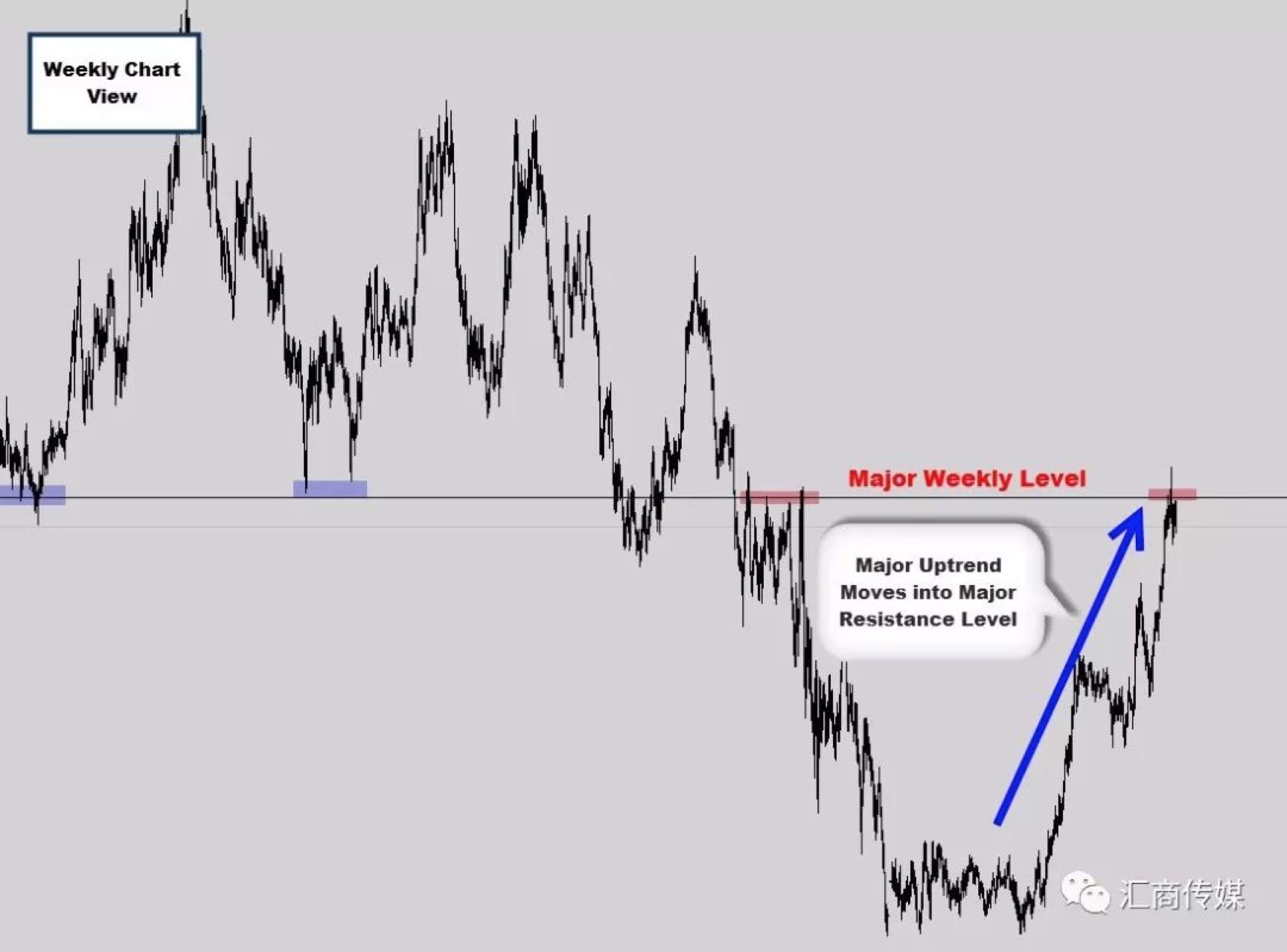
From the chart above we can see there’s a bullish trend toward the key price levels. Transferred to the daily chart view, you will find it as below:
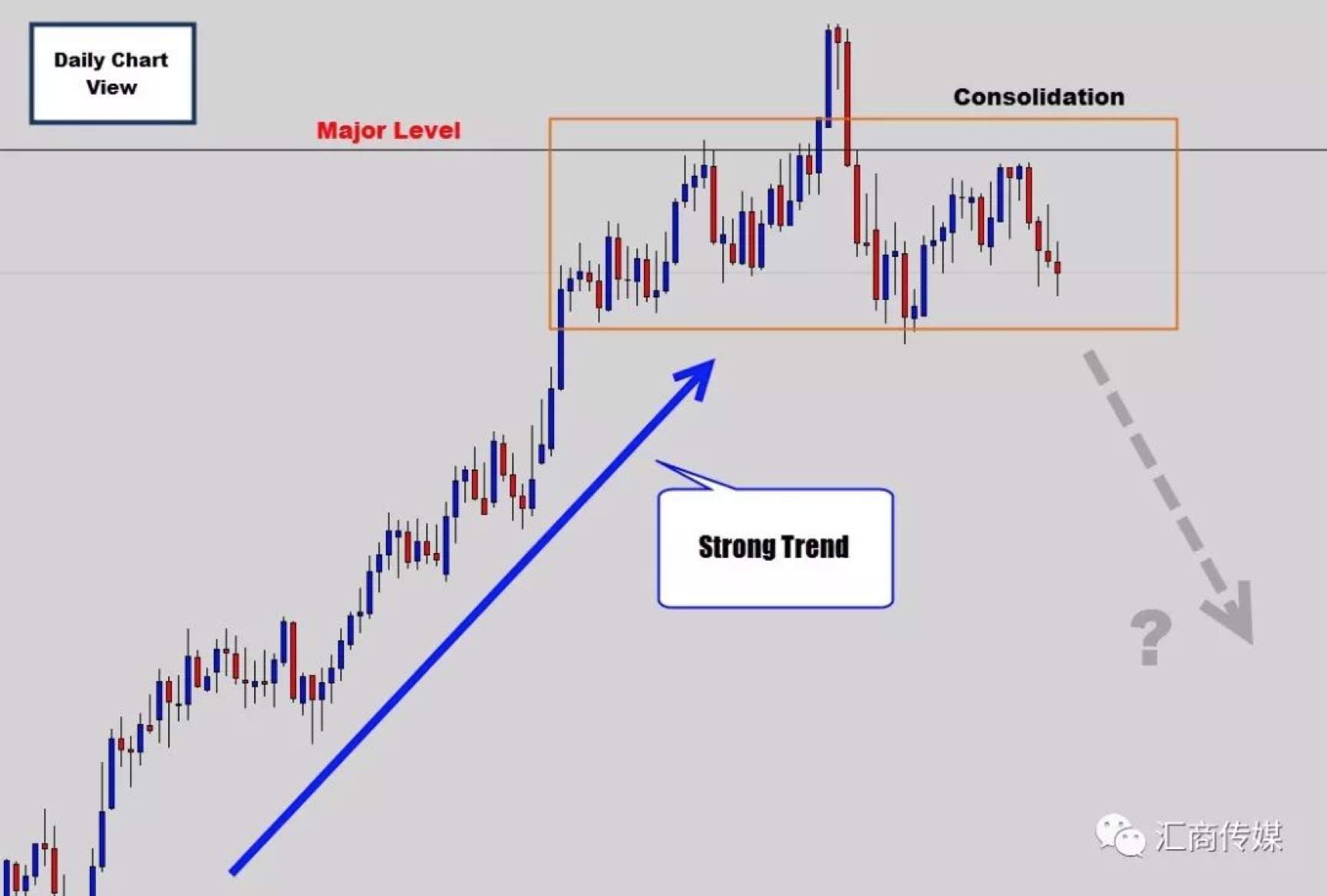
As the trend approaches resistance level, it slows down and enters consolidation. This shows that there is a lot of willingness to sell at key prices.
In the weekly chart above, there was also a false breakout, which is just a classic bullish breakout trap. Some innocent traders buy in, but just to give other short traders better opportunities to enter the market. Insufficient buying has prevented the price from continuing to rise.
There are many stop-profit and stop-loss orders near the key price. But, be very cautious when trading near key prices. If you are not experienced enough, it is better to stay away.
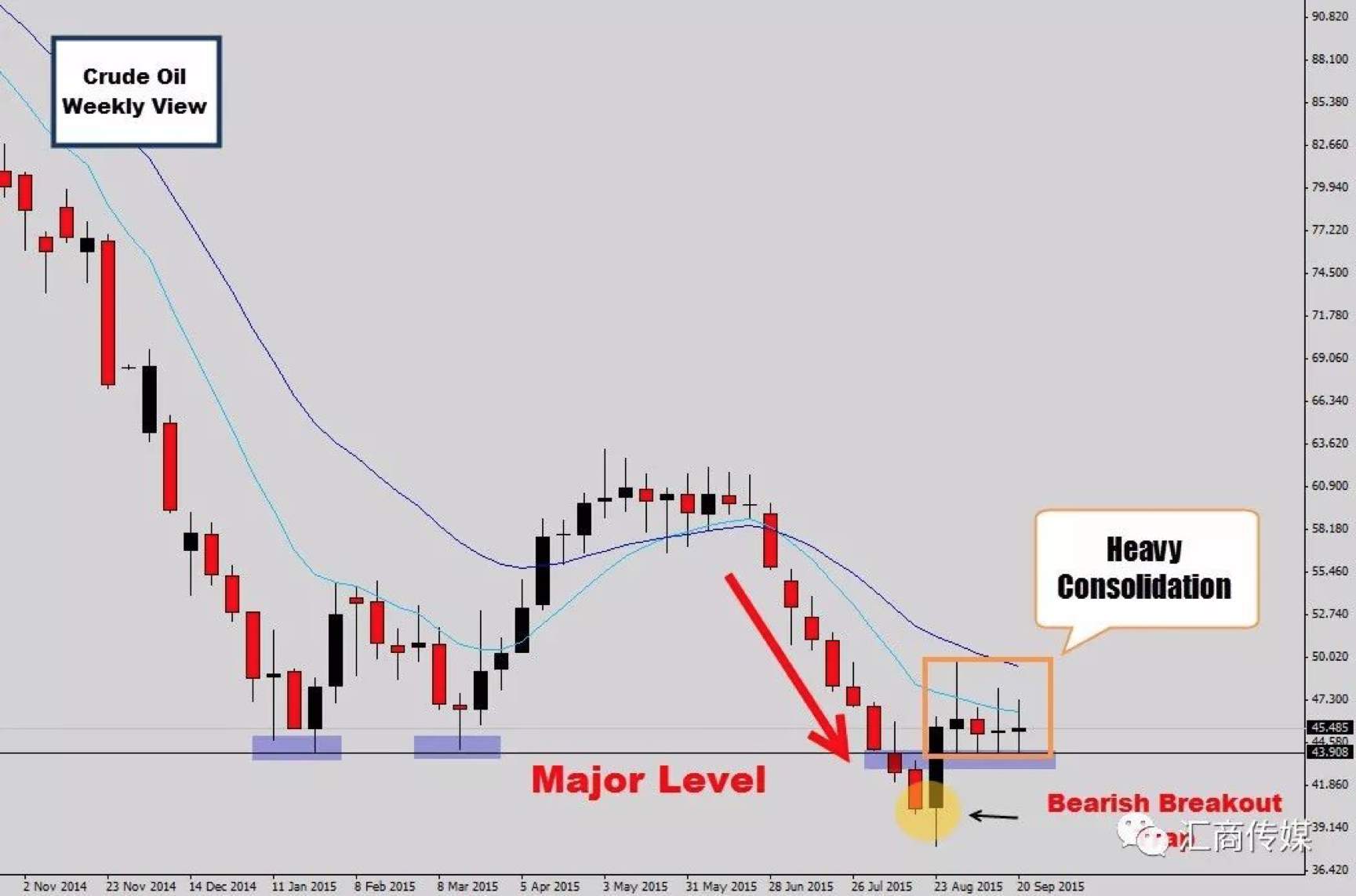
Here is another example of consolidation happened at key price levels. There is a strong support level in the crude oil chart. A strong drop broke through the support level and seemed to break through, but soon the price reversed. Here is what it looks like in the daily chart:
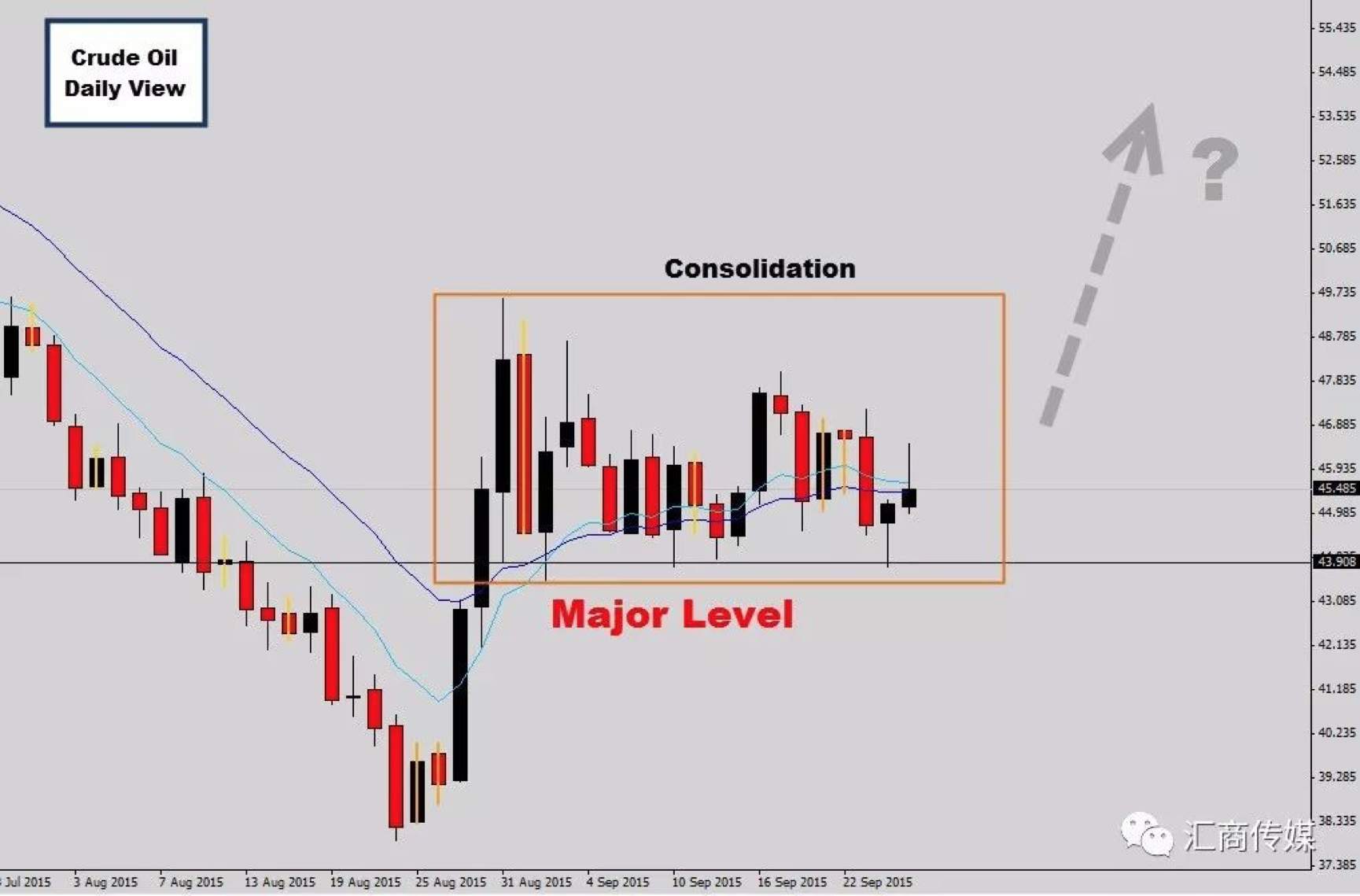
We can see that after the bearish breakout trap near the key support level, the price fell into consolidation.
In short, weekly support and resistance are key prices where there are a lot of buy and sell orders here. Once the price reaches this area, a large number of trading are triggered, and major players are waiting for a potential price reversal. Therefore, consolidation is likely to occur near key weekly prices.
2. Major movements of major central banks
As a swing trader, I mainly do chart analysis instead of market fundamentals data. However, the fundamental events of some major central banks are still worth paying attention to.
The central banks of the major powers hold huge wealth, and monetary policies that they formulate will cause global fluctuations. Concerned about the economic stability, the impact of central bank policies to the market is slow and long-term, and they often lead to changes in major market trends.
However, their public statements are usually very subtle, and they never promise on any results. Therefore, the statement of important central banks will cause large fluctuations in the market, because each player interprets the results in their own way.
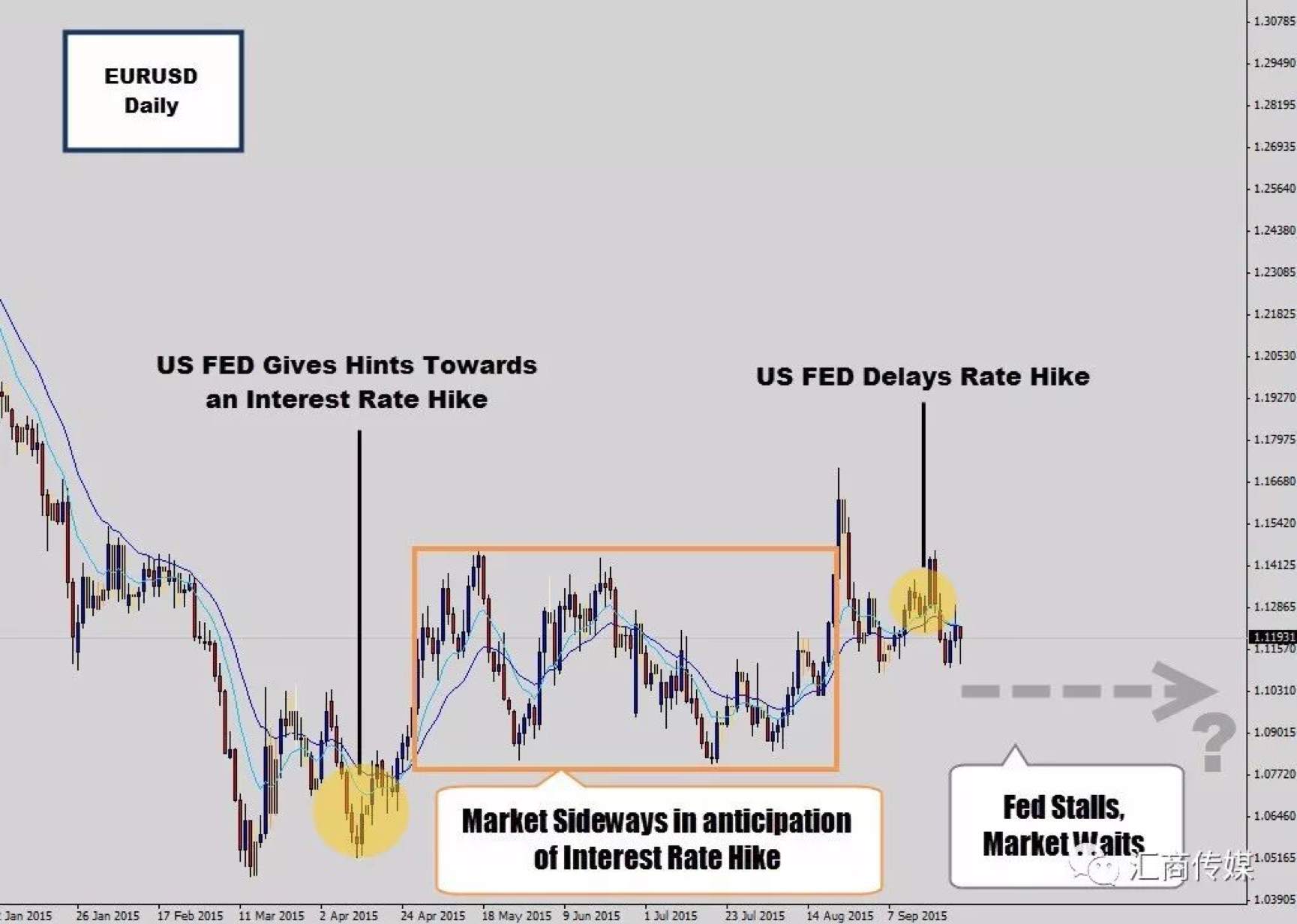
Above is a daily chart of EUR / USD in 2015 and I have marked several important points on it that are the Fed's speeches on potential rate hikes. The interest rate hike at that time were the first in ten years, and therefore attracted great market attention. As a result, when the central bank expressed that it was "possible" to raise interest rates, the market entered into a consolidation. Until the confirmation, it is almost impossible for the market to form a trend.
In short, news about the fundamentals from the central bank is the focus of many people. If the central banks of large countries suggest potential policy changes, the market is extremely likely to enter consolidation until the final result is determined. As a technical analysis trader, we don't have to follow the news, after all, price trends are our guide to trading. However, it is still good to know important fundamental information, because it can prepare us for possible changes in the market.
3. Holidays
Financial markets are seasonal, and sometimes price fluctuations are small, especially during the Christmas and New Year holidays. During these time, people are gathering with relatives and friends and are away from the market.
Generally, the market is relatively active before Christmas, then enters a period of consolidation, and gradually resumes activity until after mid-January.
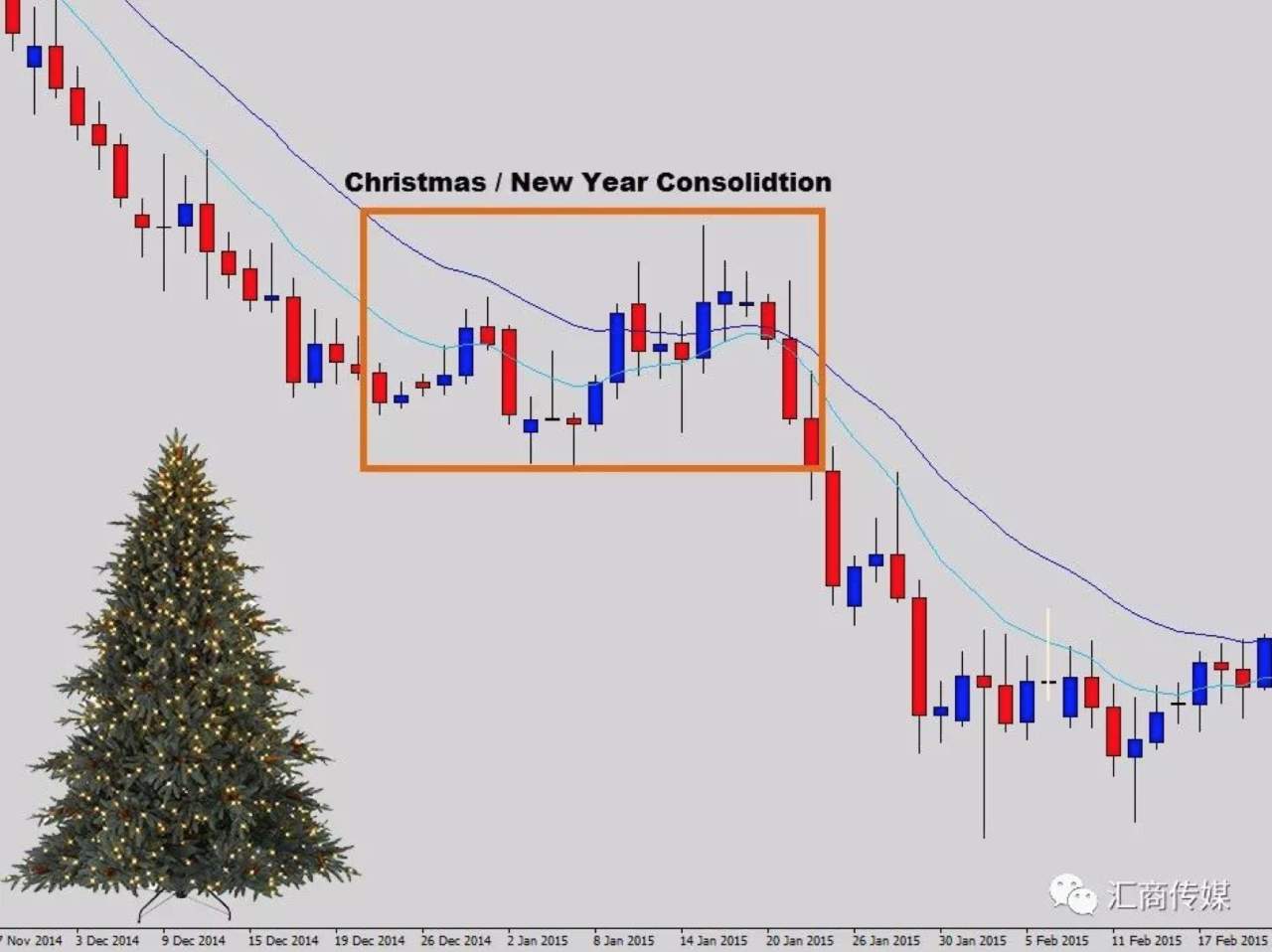
Another period to you want to pay attention to is the summer, mainly in the northern hemisphere. At this time, most financial players are on vacation, reducing market liquidity and resulting in a market consolidation period.
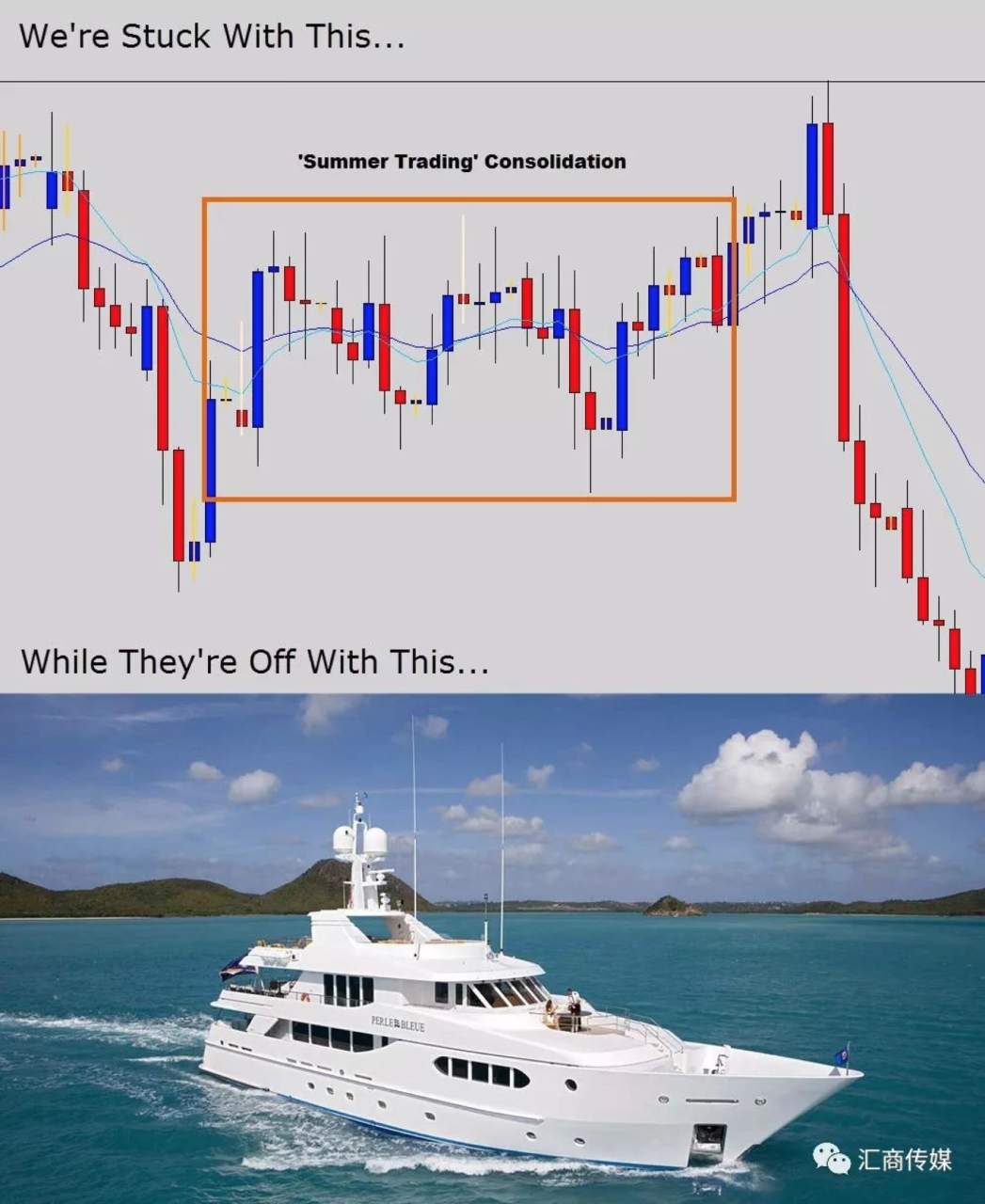
In general, market is less active during important holidays such as Christmas and during the summer in the northern hemisphere and it is not suitable for trading due to a lack of market liquidity.
4. Interpret the market structure for clues
As a technical analysis trader, we need to evaluate the current market situation and predict potential price fluctuations. One of the best methods is to pay attention to the high and low points of fluctuations lead by prices. Through the high and low points, we can have a rough understanding of the current market structure. One of the ways to identify consolidation is to pay attention to the time when the price breaks the trend high / low pattern.
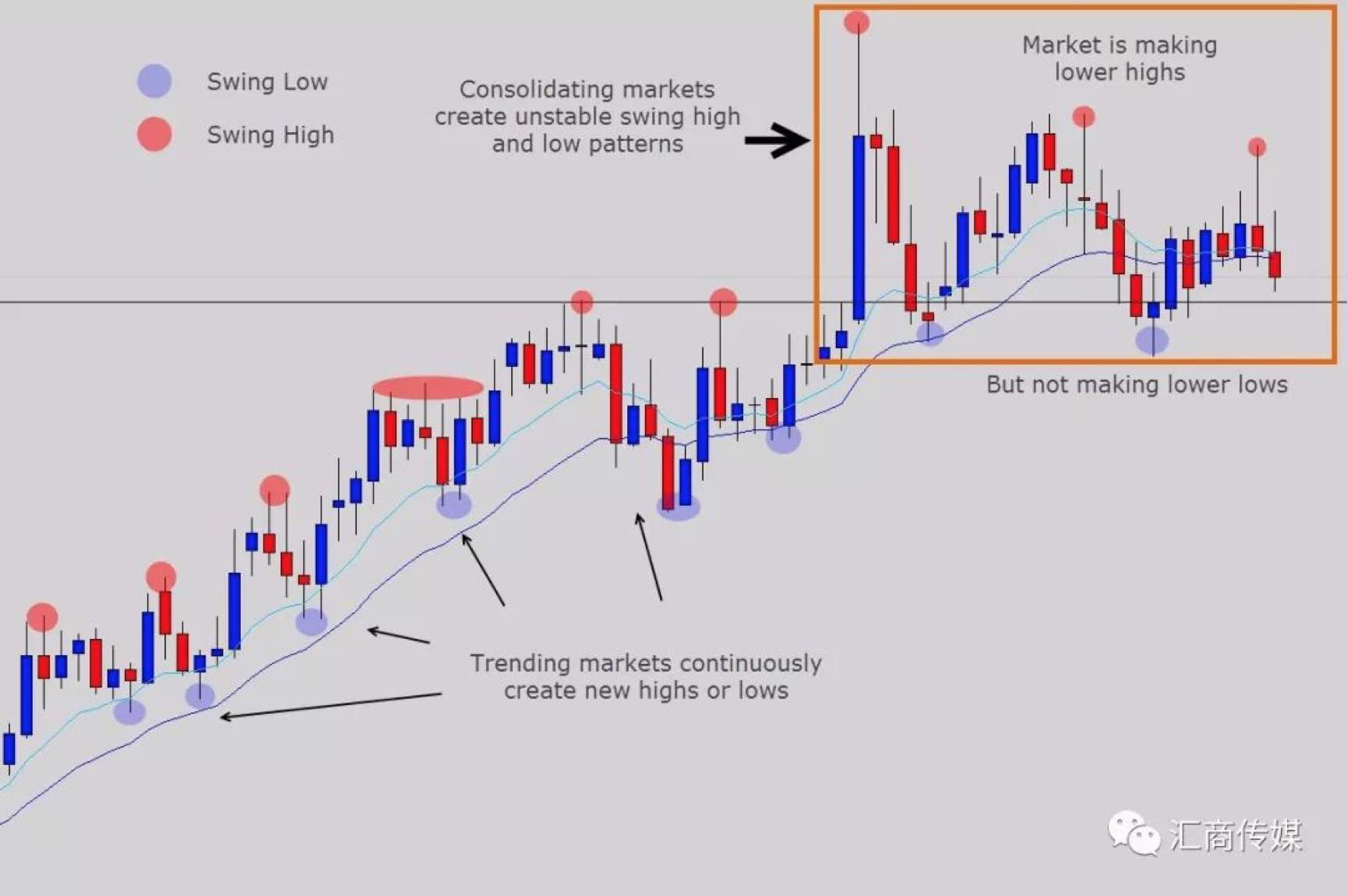
In the chart above, the market is in a trend and is constantly new high points and low points. Suddenly, the price started to go against such pattern and formed a lower high point. This tells us that the market has fallen out of the trend and entered a consolidation structure.
Here is another example:
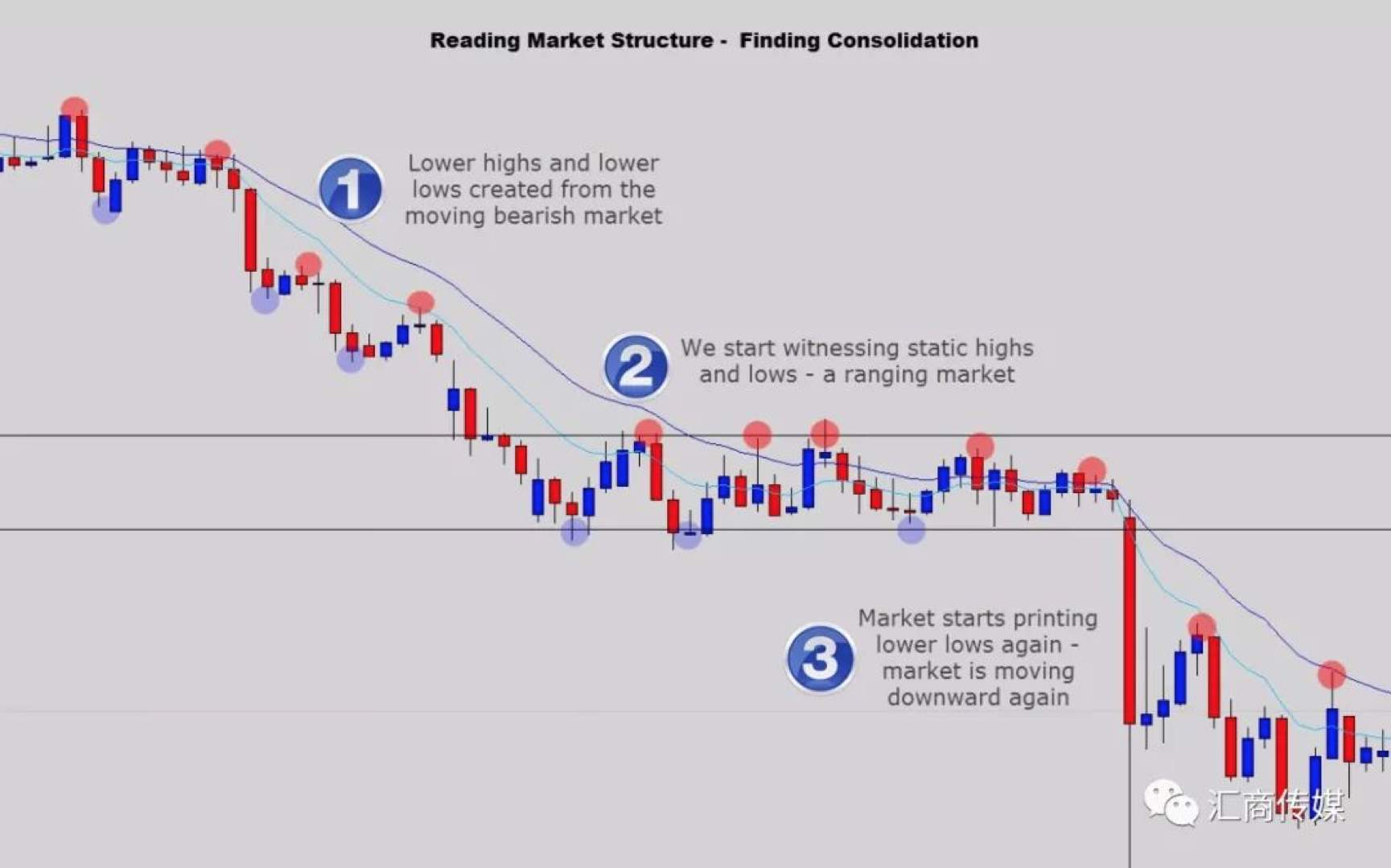
Similarly, we can interpret the market by looking at the distribution of highs and lows. At the beginning, the trend goes continuously downward and then the price suddenly broke this pattern and high and low points of a similar level appeared. This is a textbook range market.
In short, technical analysis does not need to be complicated, and you can make a fairly good market analysis based on the highs and lows of volatility. Identifying the market structure allows you to quickly understand whether the market is in a trend or is about to consolidate.
5. Conclusion
Above are some of the methods on identifying market consolidation that I wish to share with you today. Of course, there is never a certain way that can show you exactly when the consolidation will start, but using these methods well will certainly improve your understanding of the market and minimize the risks of entering at a wrong timing.
風險提示:本文所述僅代表作者個人觀點,不代表 Followme 的官方立場。Followme 不對內容的準確性、完整性或可靠性作出任何保證,對於基於該內容所採取的任何行為,不承擔任何責任,除非另有書面明確說明。

暫無評論,立馬搶沙發