


Countries are being forced to use extreme measures to keep the economy afloat amid the coronavirus crisis.
Now, the Bank of England has signalled that it may take the cost of borrowing below zero.
Last month, the Bank started new work on how negative interest rates could affect banks and the wider economy.
But what exactly are negative interest rates? And could a world where savers are penalised and borrowers rewarded end up doing more harm than good?
What are negative interest rates?
The term "interest rates" is often used interchangeably with the Bank of England base rate.
Described as the "single most important interest rate in the UK", the base rate determines how much interest the Bank of England pays to financial institutions that hold money with it, and what it charges them to borrow.
High street banks also use it to determine how much interest they pay to savers, as well as what they charge people who take out a loan or mortgage.
The Bank of England usually lowers interest rates when it wants people to spend more and save less.
It cut them to a fresh low of 0.1% in March to try to stimulate the economy amid the coronavirus pandemic.
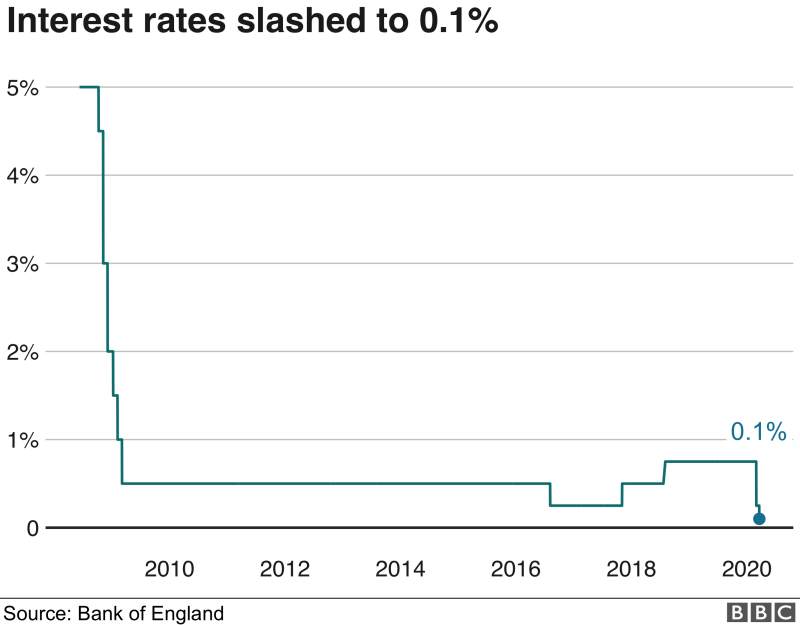
In theory, taking interest rates below zero should have the same effect. But in practice, it's a bit more complicated.
After all, why would anyone pay to stash money in a savings account or lend someone money, when they can keep the cash at home for free?
Why might this happen now?
The Bank of England's number one job is to keep prices across the economy rising steadily every year.
This is known as the Bank's inflation target, which is set at 2% by the government.
Inflation, as measured by the consumer prices index (CPI), fell to 0.8% in April, from 1.5% in March.
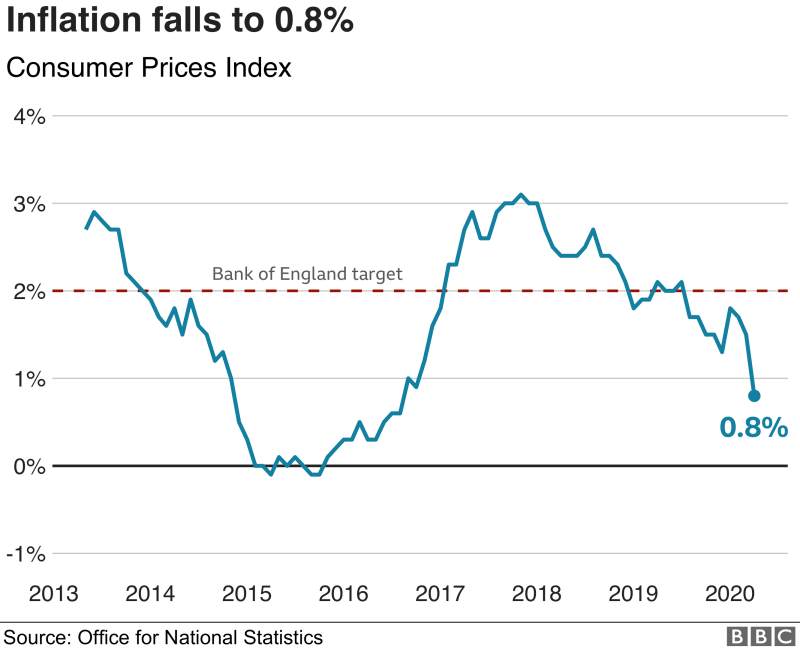
While this means the pound in your pocket stretches further right now, if inflation remains low for too long, bosses start factoring that into pay reviews. This can then dampen consumer confidence and spending.
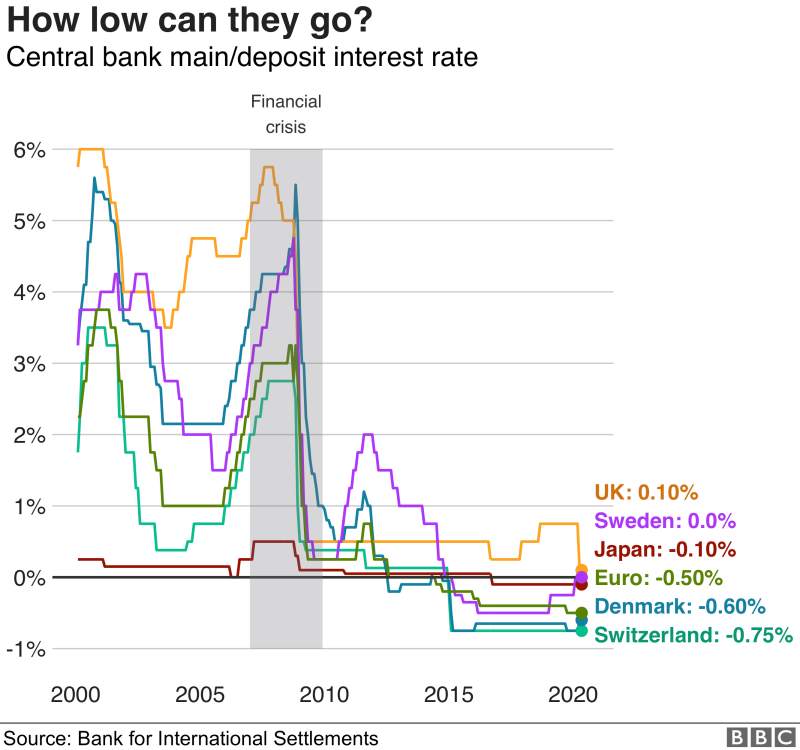
Central banks have been cutting interest rates to spur inflation for years. But as rates approached zero across the developed world, a handful went a step further.
Sweden, Switzerland, Japan and the 19 nations of the eurozone all took interest rates below zero.
In Switzerland, negative interest rates have also helped to discourage investors from pouring money into the country during times of uncertainty.
Reprinted from Yahoo Finance, the copyright all reserved by the original author.
風險提示:本文所述僅代表作者個人觀點,不代表 Followme 的官方立場。Followme 不對內容的準確性、完整性或可靠性作出任何保證,對於基於該內容所採取的任何行為,不承擔任何責任,除非另有書面明確說明。

暫無評論,立馬搶沙發