

- At the start of Europe’s lockdown, the Swedish krona weakened sharply against the single currency, with one euro fetching 11.2025 SEK on March 18.
- Now, a euro fetches 10.4704 Swedish krona (SEK) Thursday.
- The strengthening has nothing to do with Sweden’s no-lockdown policy, experts note.
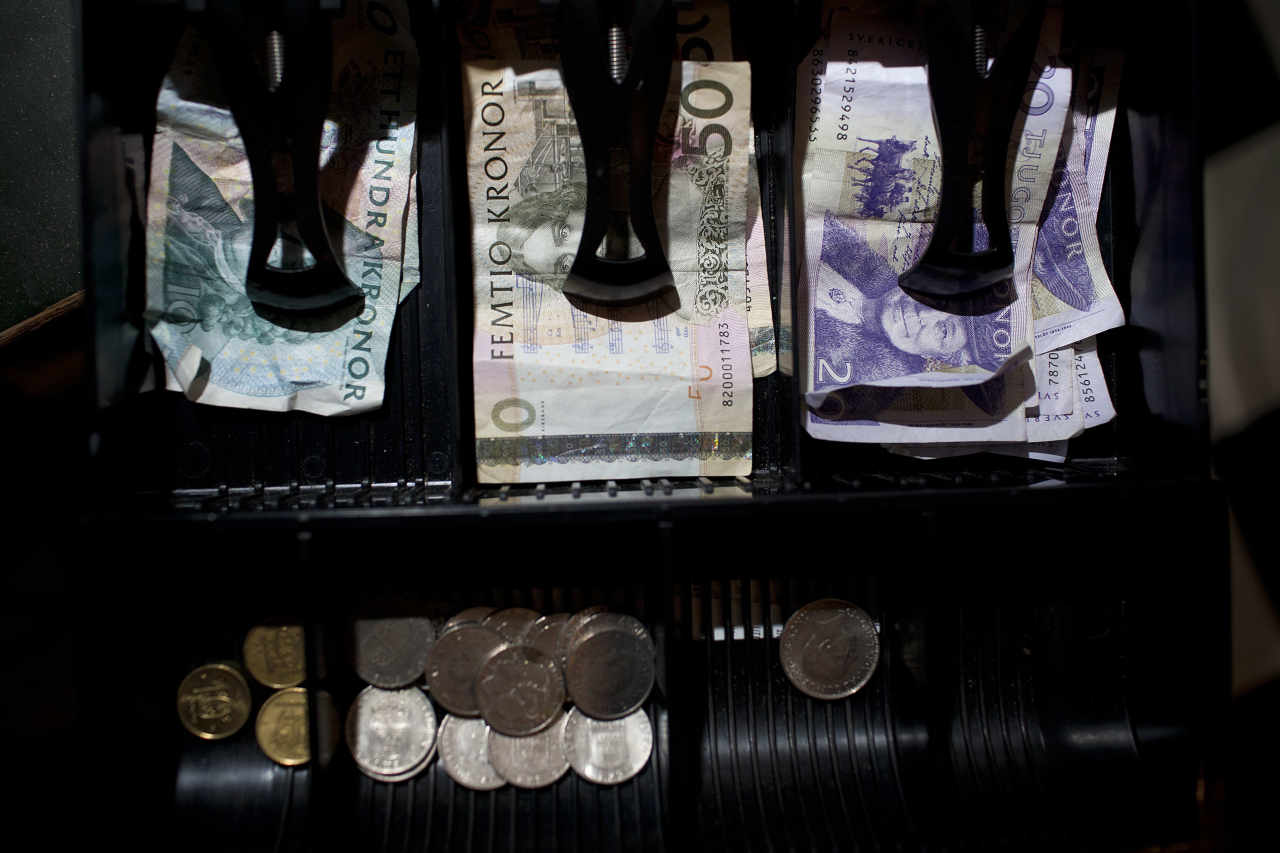
Sweden’s currency, the krona or crown, has strengthened against the euro in the last three months, as the country went against the grain in its response to the coronavirus pandemic and kept much of its public and business life open.
As the rest of Europe went into lockdown, the Swedish krona weakened sharply against the euro, with one euro fetching 11.2025 SEK on March 18. Now, over three months on, the currency has strengthened and on Thursday, a euro fetched 10.4704 Swedish krona (SEK).
While most of the continent imposed widespread restrictions, Sweden took a more relaxed, albeit controversial, approach to the pandemic by allowing most schools, bars and restaurants to remain open, although it banned mass gatherings and visits to care homes.
Nonetheless, Sweden’s central bank introduced a quantitative easing (QE) program in an attempt to mitigate the economic impact of the Covid-19 outbreak, and on Wednesday increased the size and scope of its asset purchases from 300 billion Swedish krona ($320 billion) to 500 billion SEK. The program will be expanded to include corporate bonds from September, the Riksbank said, and will last until June 2021.
Reuters noted that analysts had expected the Riksbank to follow the lead of the European Central Bank in boosting its QE program, partly over worries of a stronger Swedish crown. The central bank also kept its key interest rate at 0%, as forecast. The crown initially weakened against the euro after the announcement but then recovered to trade around the same level as before.
Despite stimulus measures potentially weakening demand for the currency, economists James Smith and Petr Krpata from ING said they expect the Swedish crown to continue to strengthen against the euro.
“We don’t see (Wednesday’s central bank) decision as a game-changer for Sweden’s krona, and so far the impact on the currency has been fairly limited,” the economists said in a note Wednesday.
“The bar for a rate cut is high, the extension of QE is not a complete surprise (the timing of the decision maybe, but not the extension itself) and the prime driver of SEK should continue to be the general risk environment, which we expect to be constructive in the second half of the year.”
The economists said they were expecting the EUR/SEK to move towards 10.00 by the end of 2020.
“However, what we can take away from the July meeting is that the Riksbank won’t be actively providing any impetus for SEK strength in the near future,” they added.
Speaking to CNBC Wednesday, Krpata noted that the krona’s appreciation “had nothing to do with Sweden having no lockdown.”
″(It) was more a function of the change in risk sentiment as the Covid-19 crisis peaked globally, while the SEK’s relative(ly) idiosyncratic position improved versus its cyclical G-10 peers ... Also, the Riksbank did not cut rates, unlike most of the G10 central banks,” he noted.

Other currency analysts also expect demand for the Swedish krona to continue. Stephen Gallo, European head of FX strategy at BMO Capital Markets, noted Wednesday that EUR/SEK “is likely to encounter demand on dips below 10.40.”
“The Riksbank is a lot more of a ‘currency and trade balance manager’ than it used to be, even though targeting a level for the SEK (or EUR/SEK) is not the central bank’s explicit goal. But what this means is that the deterioration in Sweden’s trade balance since early-2020 probably matters a great deal for the Riksbank,” he told CNBC via email.
A strengthening currency can be concerning for central banks trying to promote growth, especially as countries emerge from the coronavirus crisis. A stronger currency can make a country’s exports more expensive, for example, and for export-oriented Sweden, that could be an issue.
“During the last decade, Sweden experienced a material deterioration in its current account balance relative to the eurozone. What that appeared to instigate was a long period of SEK weakness vs the EUR (basically a devaluation of the SEK),” Gallo noted.
“It looks like this trend in the SEK did eventually cause some improvement in Sweden’s external position towards the end of 2019; but naturally, the global trade environment has become even more uncertain in 2020.”
He added that Sweden faces another hurdle: its main trading partners are in the eurozone, and “the EUR can at times provide those countries with a competitive advantage relative to Sweden.”
Reprinted from cnbc.com, the copyright all reserved by the original author.
風險提示:本文所述僅代表作者個人觀點,不代表 Followme 的官方立場。Followme 不對內容的準確性、完整性或可靠性作出任何保證,對於基於該內容所採取的任何行為,不承擔任何責任,除非另有書面明確說明。

暫無評論,立馬搶沙發