


Intermarket analysis studies the relationships between asset classes, typically currencies, bonds, commodities, and stocks.
It can help traders generate broader trading ideas, reveal potential market turning points, or confirm other analysis methods.
The price action of currencies is often driven by their relationship with commodities, bonds, and stock indices.
For example, here are some traditional intermarket relationships:
- A falling U.S. dollar is viewed as positive for commodities prices, while a rising U.S. dollar is considered negative for commodities price.
- Falling bond prices/rising interest rates tend to be negative for stocks while rising bond prices/falling interest rates are normally good for stocks,
- Rising commodities prices are historically a sign of economic growth which is good for the stock market and negative for bond prices.
Whew! That’s a lot of intermarket correlations to remember! And that’s just a couple of intermarket relationship examples.
Here’s a neat one-page cheat sheet for you to bookmark and make it easy for you!
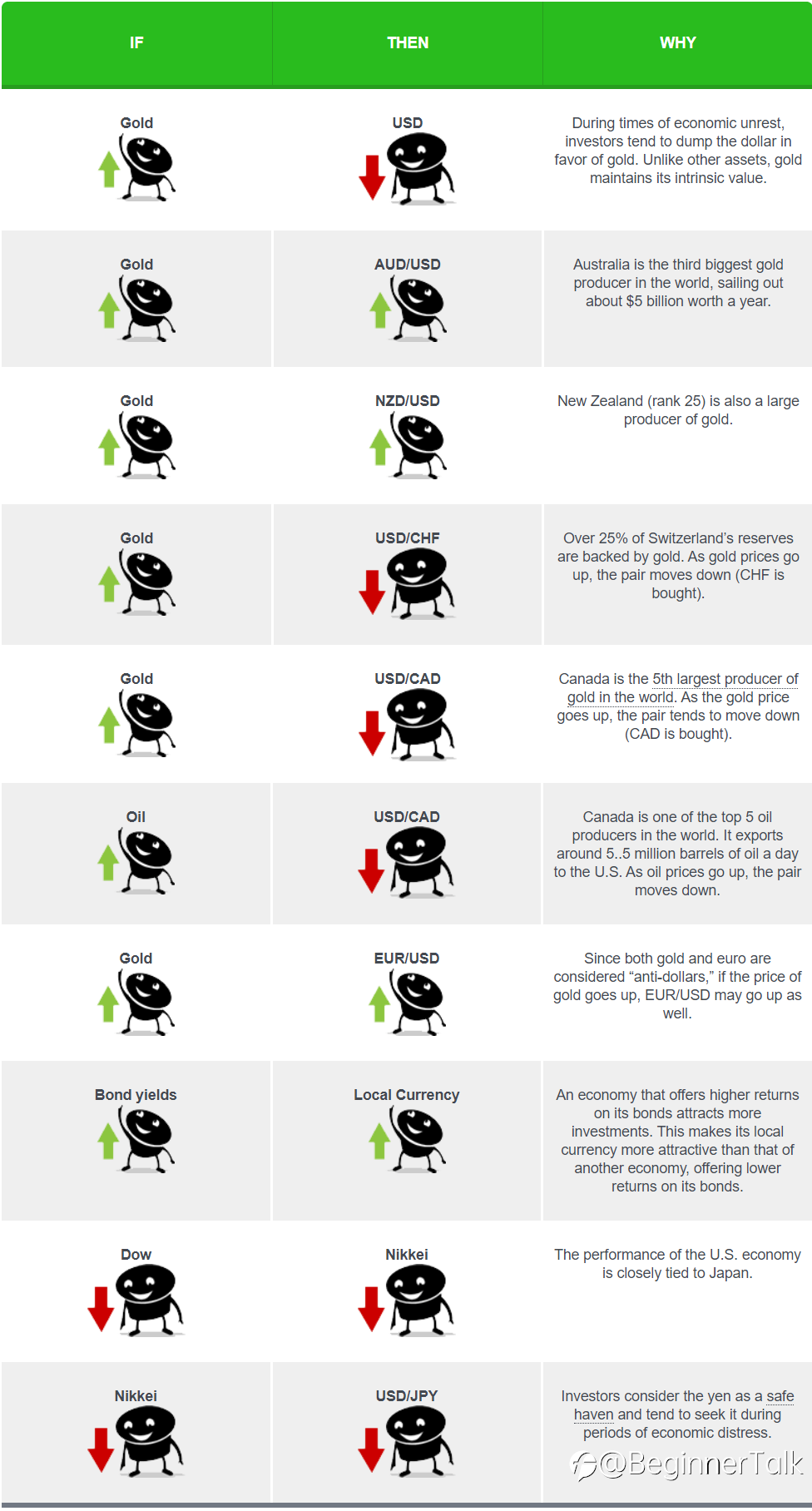
Reprinted from Babypips, the copyright all reserved by the original author.
風險提示:本文所述僅代表作者個人觀點,不代表 Followme 的官方立場。Followme 不對內容的準確性、完整性或可靠性作出任何保證,對於基於該內容所採取的任何行為,不承擔任何責任,除非另有書面明確說明。
 暫無留言。 來發表第一則觀點吧。