


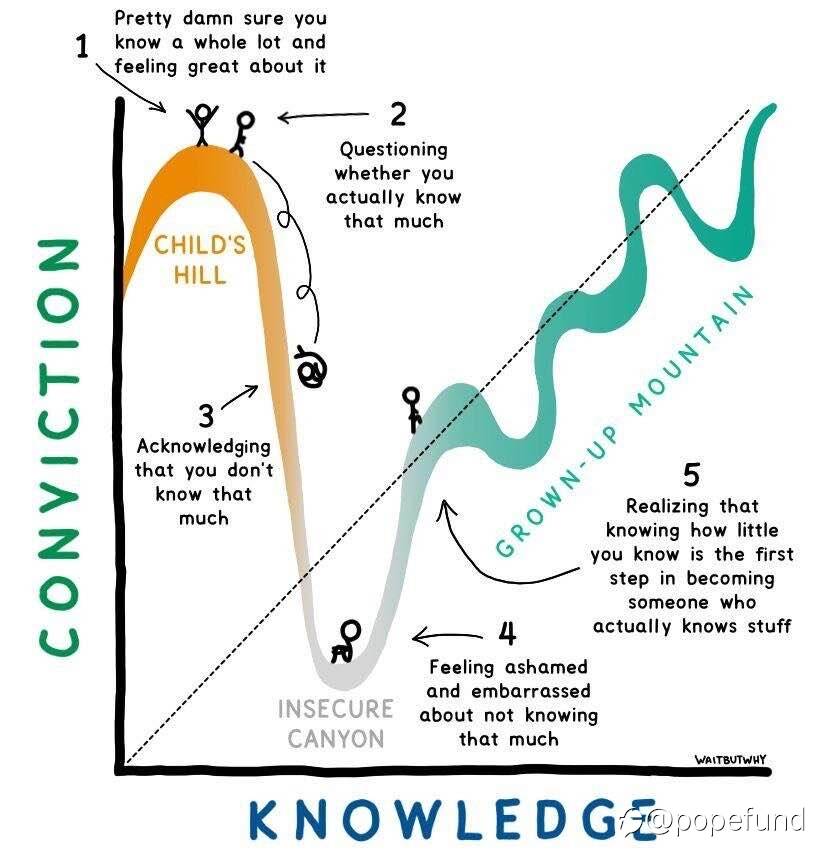
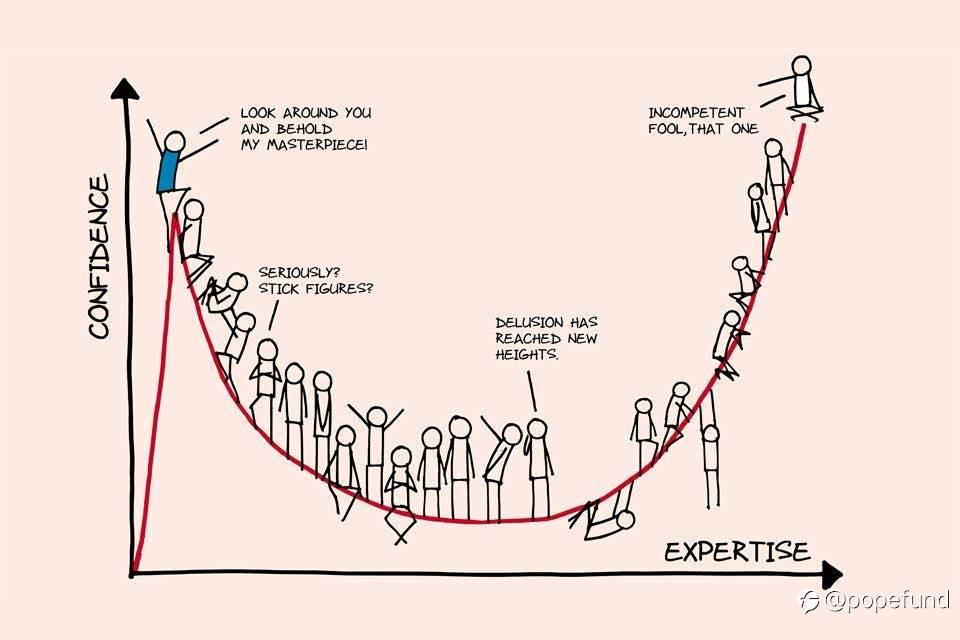
The Dunning–Kruger effect is a hypothetical cognitive bias stating that people with low ability at a task overestimate their own ability, and that people with high ability at a task underestimate their own ability.
As described by social psychologists David Dunning and Justin Kruger, the bias results from an internal illusion in people of low ability and from an external misperception in people of high ability;
The miscalibration of the incompetent stems from an error about the self, whereas the miscalibration highly competent stems an error from others.
It is related to the cognitive bias of illusory superiority and comes from people’s inability to recognize their lack of ability.
Without the metacognition people cannot objectively evaluate their level of competence.


已編輯 15 Aug 2021, 22:33
風險提示:本文所述僅代表作者個人觀點,不代表 Followme 的官方立場。Followme 不對內容的準確性、完整性或可靠性作出任何保證,對於基於該內容所採取的任何行為,不承擔任何責任,除非另有書面明確說明。



 暫無留言。 來發表第一則觀點吧。