


what is the reason?
Why did the Ross central bank raise interest rates for the first time after the war? An important reason is the depreciation of the ruble and the expectation of rising inflation. Oil prices are also contributing to these problems. For months, Russia's central bank gave the impression of normalization and gradually reduced key interest rates that were sharply raised at the start of the war of aggression against Ukraine in February 2022. Since September 2022, the interest rate is only 7.5%, which is even lower than the pre-war level. But why did the central bank decide to raise rates for the first time since the war began, raising the key rate by a full basis point to 8.5% on Friday - more than most economists expected? Central bank Governor Elvira Nabiullina has made it clear that another rate hike is the most likely scenario. That's because the monetary watchdog sees a growing danger of inflation, even though it has recently run below the central bank's 4 percent target. The central bank expects inflation to reach 5.0% to 6.5% this year and not return to its stable 4% target until 2024. She is now trying to resist this development.
trademaxus
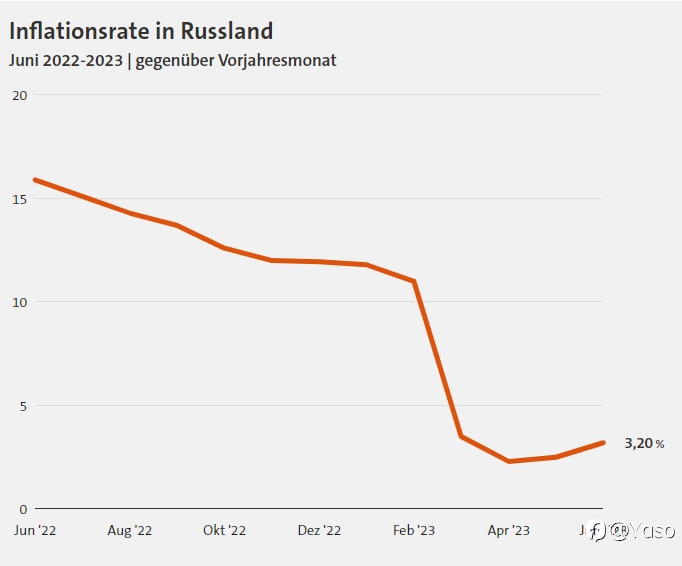
With a flexible interest rate policy, monetary authorities are able to cushion the economic impact of the conflict in Ukraine and Western sanctions on Russia. Economic growth is expected to be between 1.5% and 2.5% this year, compared with a previous forecast for gross domestic product (GDP) of 0.5% to 2.0%.
A sentence in the central bank's statement on raising interest rates also pointed to another reason for the hike: "domestic demand trends and the depreciation of the ruble since the beginning of 2023" have significantly increased the risk of rising prices. The ruble lost more than 35% of its value last year, but has since recovered. But the Russian currency has been experiencing a relatively sustained decline against the dollar and euro for several months. According to observers, this is partly due to oil prices, which remain relatively low despite the OPEC+ decision to curb global production. The current rate hike should also be seen in this context - and it probably won't be the only one. "Given the sharp capital outflows and the reduced support for the currency from the country's current account surplus, this move alone is unlikely to prevent further ruble depreciation," said Alexander Isakov, Russia economist at Bloomberg Economics.
風險提示:本文所述僅代表作者個人觀點,不代表 Followme 的官方立場。Followme 不對內容的準確性、完整性或可靠性作出任何保證,對於基於該內容所採取的任何行為,不承擔任何責任,除非另有書面明確說明。
 暫無留言。 來發表第一則觀點吧。