


· 閱讀量 60,361

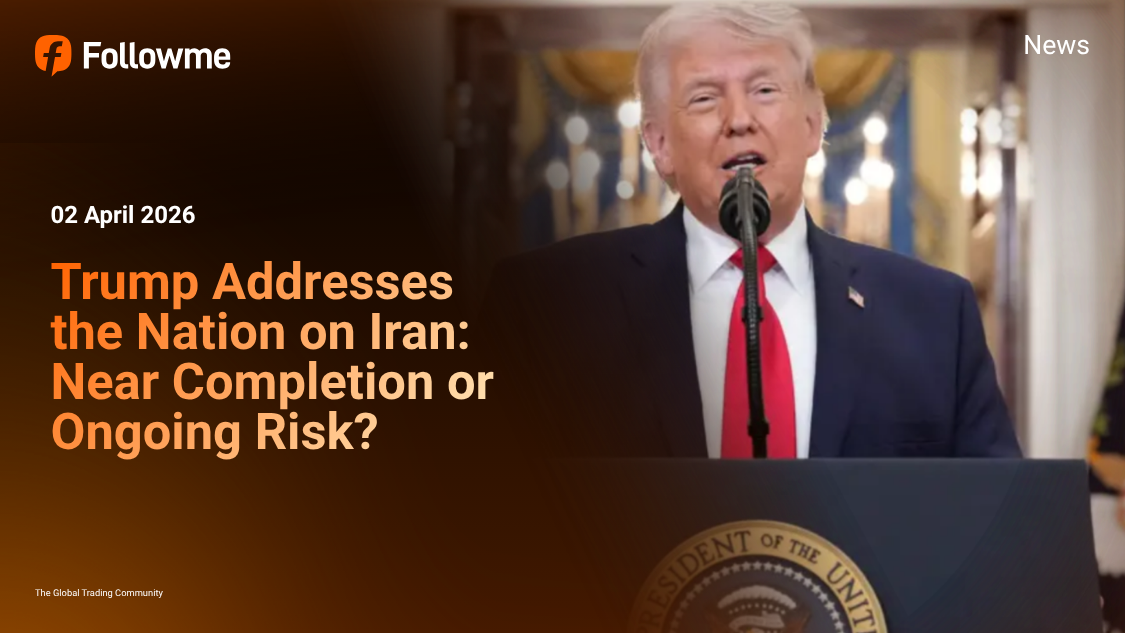
On April 1 at 9:00 p.m. EDT, Donald Trump delivered a prime-time nationwide address from the White House, providing an update on the ongoing war in Iran. The speech marked his first prime-time address since launching coordinated strikes with Israel more than a month ago.
What Trump Actually Said: A Mix of Victory and Escalation
In his 19-minute primetime address, Donald Trump struck a notably triumphant tone, declaring broad military successes against Iran while simultaneously warning of further escalation.
He framed the campaign as largely successful, emphasizing decisive U.S. military dominance and downplaying reliance on Iranian oil. At the same time, he introduced a clear pressure point by setting a deadline for Iran to reopen the Strait of Hormuz, signaling that failure to comply could trigger a new wave of strikes. The speech ultimately blended victory messaging with explicit threats, creating a narrative that suggests progress, but not closure.
Key Takeaways from the Address
-
Military impact: Trump stated that U.S. forces have significantly weakened Iran’s navy, air force, and weapons production infrastructure.
-
Victory narrative: He described the campaign as unprecedented in its success, praising troops for fast and decisive results.
-
Energy stance: He emphasized that the United States no longer depends on Iranian oil, reducing strategic vulnerability.
-
No diplomatic signal: The speech did not include any ceasefire plan or diplomatic roadmap.
-
Hormuz deadline: April 6 was set as the deadline for Iran to reopen the Strait of Hormuz.
-
Escalation warning: He warned of “extremely heavy” strikes within the next 2–3 weeks, potentially targeting key infrastructure.
-
Casualty claims: He cited casualty figures significantly higher than widely reported estimates.
-
Omitted controversy: Earlier remarks about potentially “taking” Iranian oil were not included in the official speech.
Market Reaction: Optimism Reversed as Risk Returns
The market reaction was swift and clearly reflected a shift in sentiment following Donald Trump. U.S. Equity futures moved lower, with Dow futures dropping more than 260 points, while S&P 500 futures declined 0.7% and Nasdaq 100 futures fell 0.8%. In contrast, oil prices surged sharply, with WTI crude rising back above $104, up 4.1%, and Brent crude climbing to $106, gaining 5%.
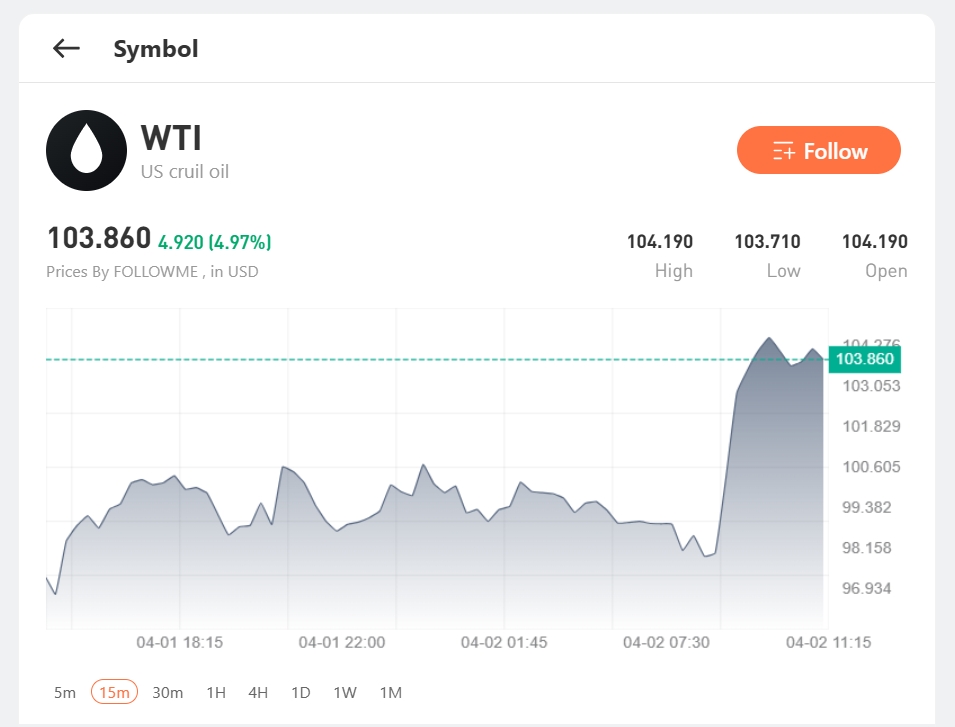
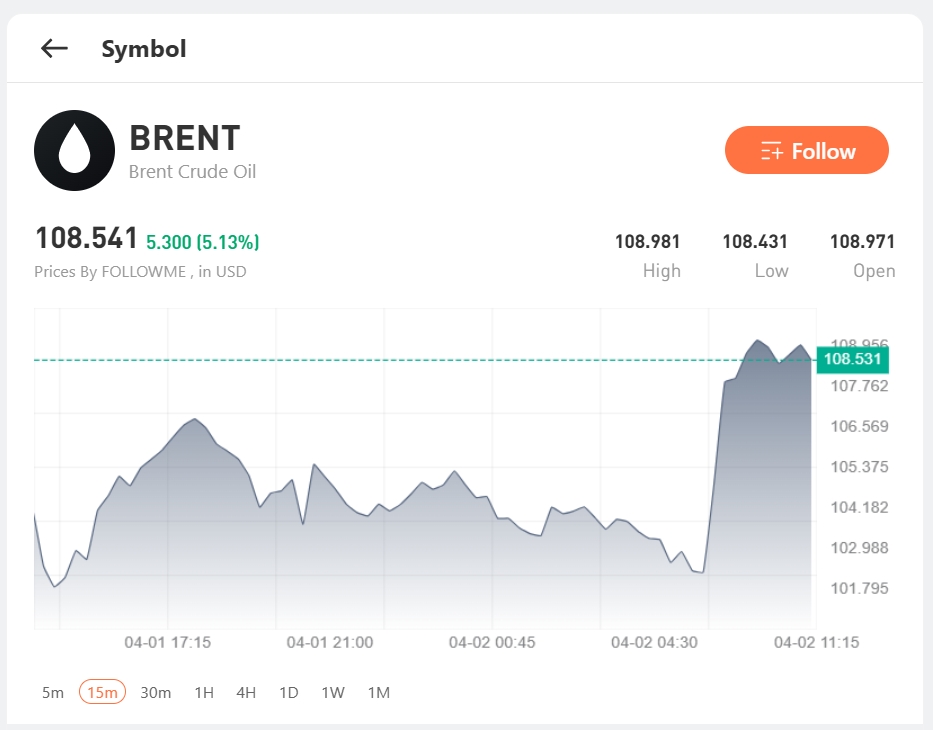
This reversal came immediately after a strong two-day rally in equities, during which the S&P 500 had advanced 3.7%, its strongest performance since May 2025, driven by expectations that the conflict might be nearing an end. The tone and substance of Trump’s speech effectively challenged that narrative, prompting markets to reprice geopolitical risk and unwind part of the recent optimism.
Risks Ahead
Analysts warn escalation could drive oil to $120–150 per barrel, with economist Paul Krugman calling $150–200 scenarios “plausible.” Iran’s Revolutionary Guard has threatened retaliation against U.S. companies in the region, naming Google, Microsoft, Apple, Intel, IBM, Tesla, and Boeing. Drone strikes on Kuwait’s airport and missile attacks on the UAE highlight the growing regional risk.
Trump is also reportedly weighing a U.S. withdrawal from NATO, raising concerns about broader geopolitical instability. Economists are increasing recession forecasts, citing energy‑driven inflation and prolonged conflict.
Investor Takeaway
Wall Street strategists caution against trading on Trump’s headlines, noting markets have swung wildly multiple times in recent days on his statements. While the war has injected extreme volatility, the fundamentals of many companies remain intact. The real impact lies in higher risk premiums and energy costs squeezing margins.
-
Sectors under pressure: airlines, transportation, petrochemicals, heavy industry.
-
Beneficiaries: energy stocks and gold, which remains near record highs around $4,490.
Key dates loom: April 6 (Hormuz deadline), mid‑April (Trump’s promised escalation), and April 21 (UnitedHealth Q1 earnings, a sentiment gauge for U.S. equities).
Conclusion
Trump’s speech conveys a clear message that the operation is nearing its end. However, with tensions still ongoing and no definitive signs of de-escalation, markets remain cautious. At this stage, actual developments and market reactions matter more than forward-looking statements, and risk continues to be the dominant factor.




Want to stay ahead of major macro developments that move the Forex market?
👉Follow Followme and check out the Weekly Economic Calendar
Download Followme Application
Follow us on:
風險提示:本文所述僅代表作者個人觀點,不代表 Followme 的官方立場。Followme 不對內容的準確性、完整性或可靠性作出任何保證,對於基於該內容所採取的任何行為,不承擔任何責任,除非另有書面明確說明。
喜歡的話,讚賞支持一下
 暫無留言。 來發表第一則觀點吧。